What closed them
Health ordinances, screened enclosures and the slow removal of a street trade.
A clean city and a disappearing kitchen
The Chili Queens did not disappear overnight. They were regulated, encumbered and eventually made economically impossible across decades — a slow removal dressed as public health.
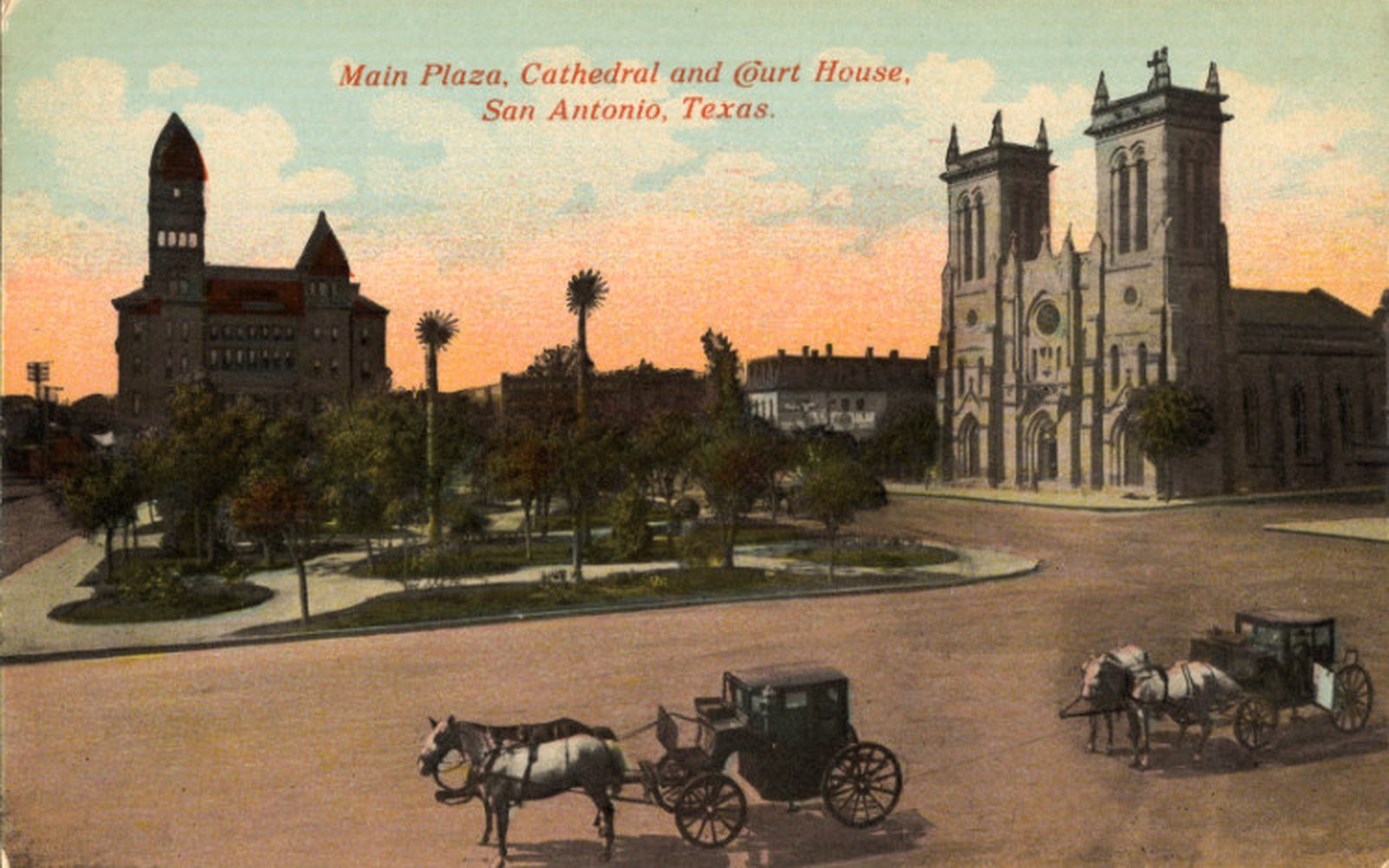
San Antonio's open-air chili stands had operated in Military Plaza and then Haymarket Plaza from roughly the 1860s through the early twentieth century. By the 1890s the city was already fielding complaints — not about food quality, as a rule, but about the stands as a feature of urban disorder: the lamplight crowds, the proximity to other street commerce, the fact that a working-class Mexican woman running a trestle table fit no tidy civic vision of a modernising southern city.
The first wave of pressure came through sanitation ordinances. City authorities required that food be covered against flies and dust, that utensils be washed in conditions no plaza stand could easily provide, and that vendors obtain permits subject to inspection. Each new rule was defensible in isolation. Taken together they imposed a cost in compliance — screens, licences, equipment — that the margin on a bowl of chili simply could not absorb.
 PL. 04
A brief revival followed a crackdown in 1937, when San Antonio's health department applied stricter food-handling codes and closed the stands on those grounds. A version of the trade returned for a time under stricter conditions — screened enclosures replacing the open trestles, a concession to the language of sanitation — but the thing that had made the stands worth visiting, the open fire, the lamplit plaza, the immediacy of the pot, was gone. A covered booth in a managed space is not a Chili Queen's stand; it is an exhibit of one.
The Second World War finished it. Wartime restrictions on public gatherings and food service, combined with the city's ongoing rationalisation of street vending, meant the stands never meaningfully reopened. By 1943 the trade was effectively over as a living institution.
What the ordinances were regulating was never only hygiene. The stands occupied prime civic space — Military Plaza and Haymarket Plaza — that the city had other plans for. Public health was the language; displacement was the outcome. The Chili Queens had fed San Antonio for the better part of a century, and the city found a bureaucratic, incremental way to make that impossible without ever having to admit that this was the aim.
 PL. 03