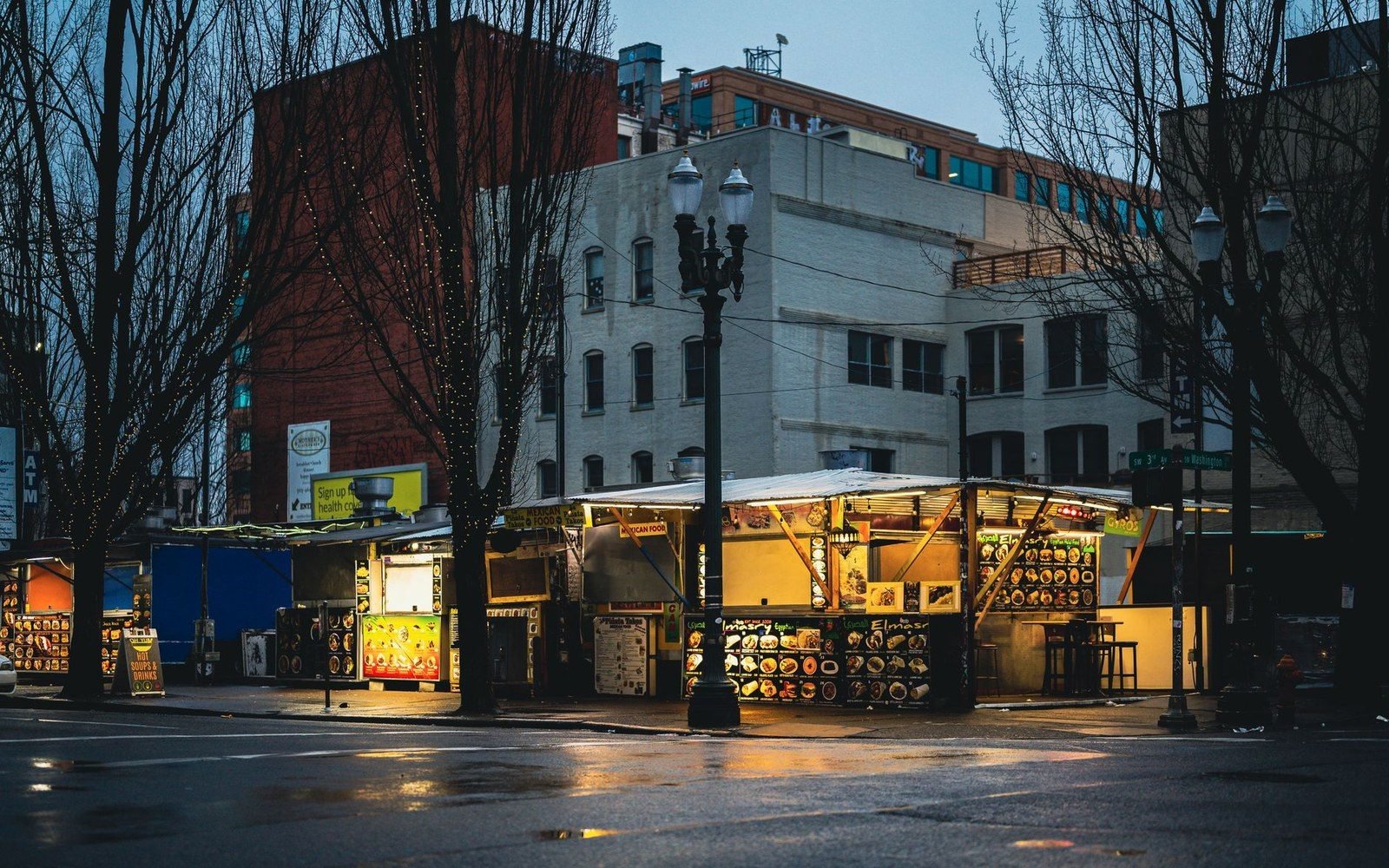
The plaza stand
The equipment was simple, the logistics were not.
What it took to feed a plaza
A Chili Queen's stand was not a fixed structure. Every evening, the women who worked Military Plaza and later Haymarket Plaza carried or carted everything they needed into the open air and built the operation from scratch. By lamplight — first kerosene, later gas — they arranged trestle tables covered with oilcloth, set out mismatched crockery, and placed the central piece of the whole enterprise: a large iron or clay pot, kept at a low, steady heat over a charcoal brasero.
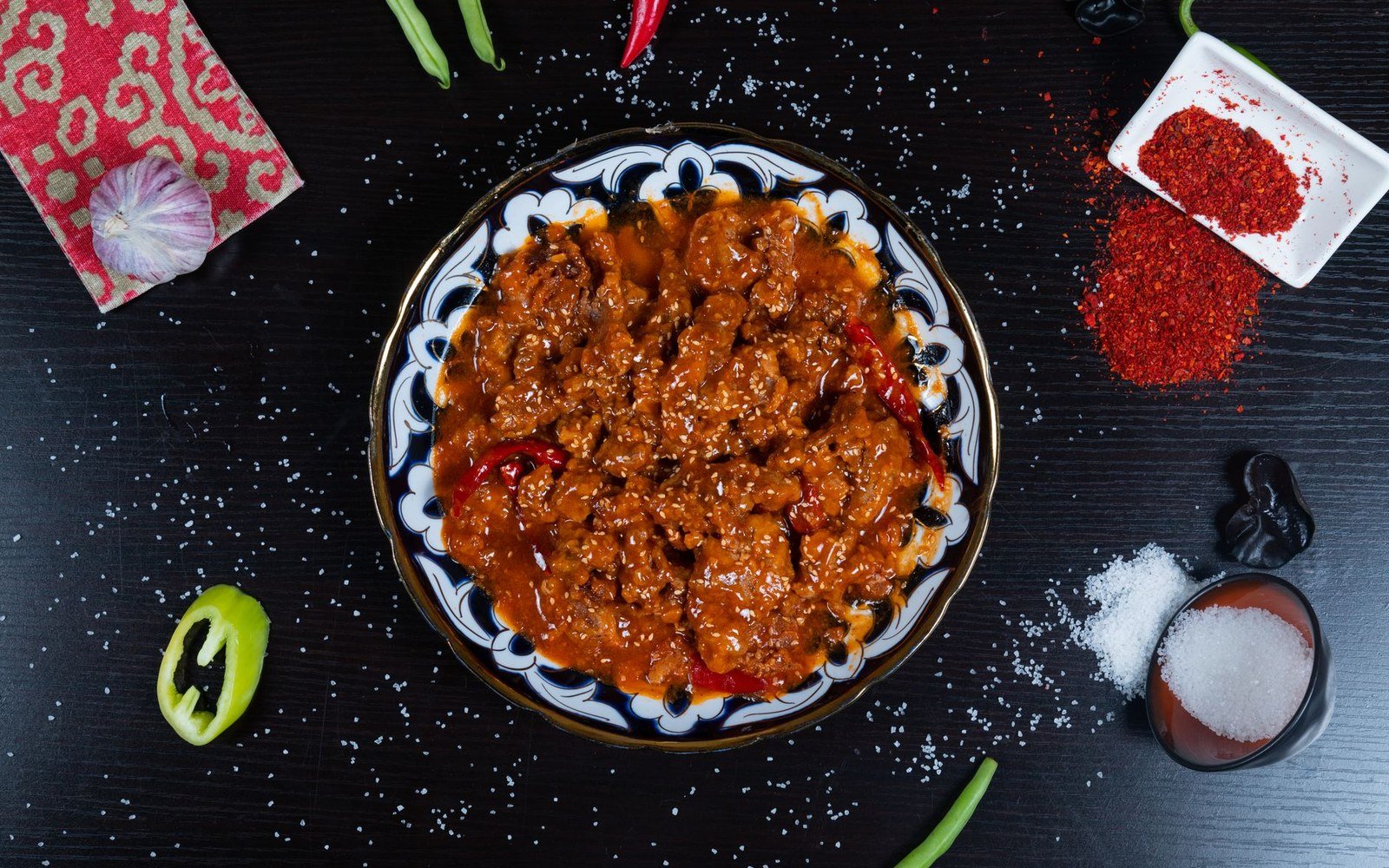
The chili itself had been cooked at home and arrived already made. The pot on the stand was for holding temperature, not for starting from raw. Beans and rice, tortillas, and occasionally tamales came alongside as separate items. A ladle, a stack of bowls, and whatever cutlery the household could spare completed the kit. Nothing was standard; each stand reflected what its operator owned.
 PL. 04
The lamps were as important as the pots. They drew customers across a dark plaza and gave the scene its characteristic glow — the image that fixed itself in the memory of every journalist and tourist who described the stands in print. Crowds gathered as much for the atmosphere as for the food, and the Queens understood that: the light and the smell of chili con carne simmering were the advertisement.
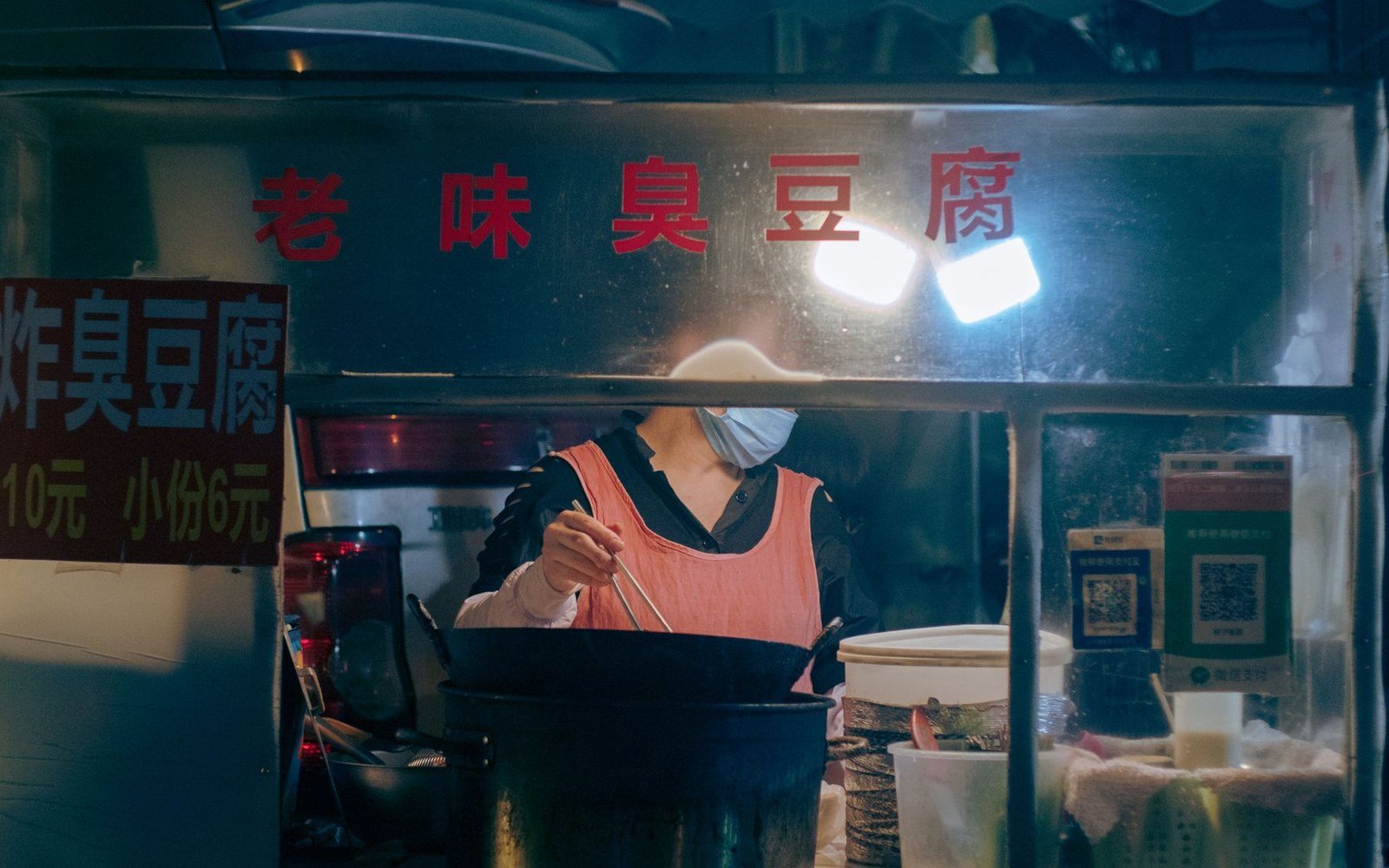
Payment was taken on the spot, in small coins, and the prices were low enough to feed labourers, soldiers, and travellers passing through. At the end of the evening, everything was packed back up: pots, lamps, table, cloth, crockery. The plaza returned to pavement; the stand existed only in operation.
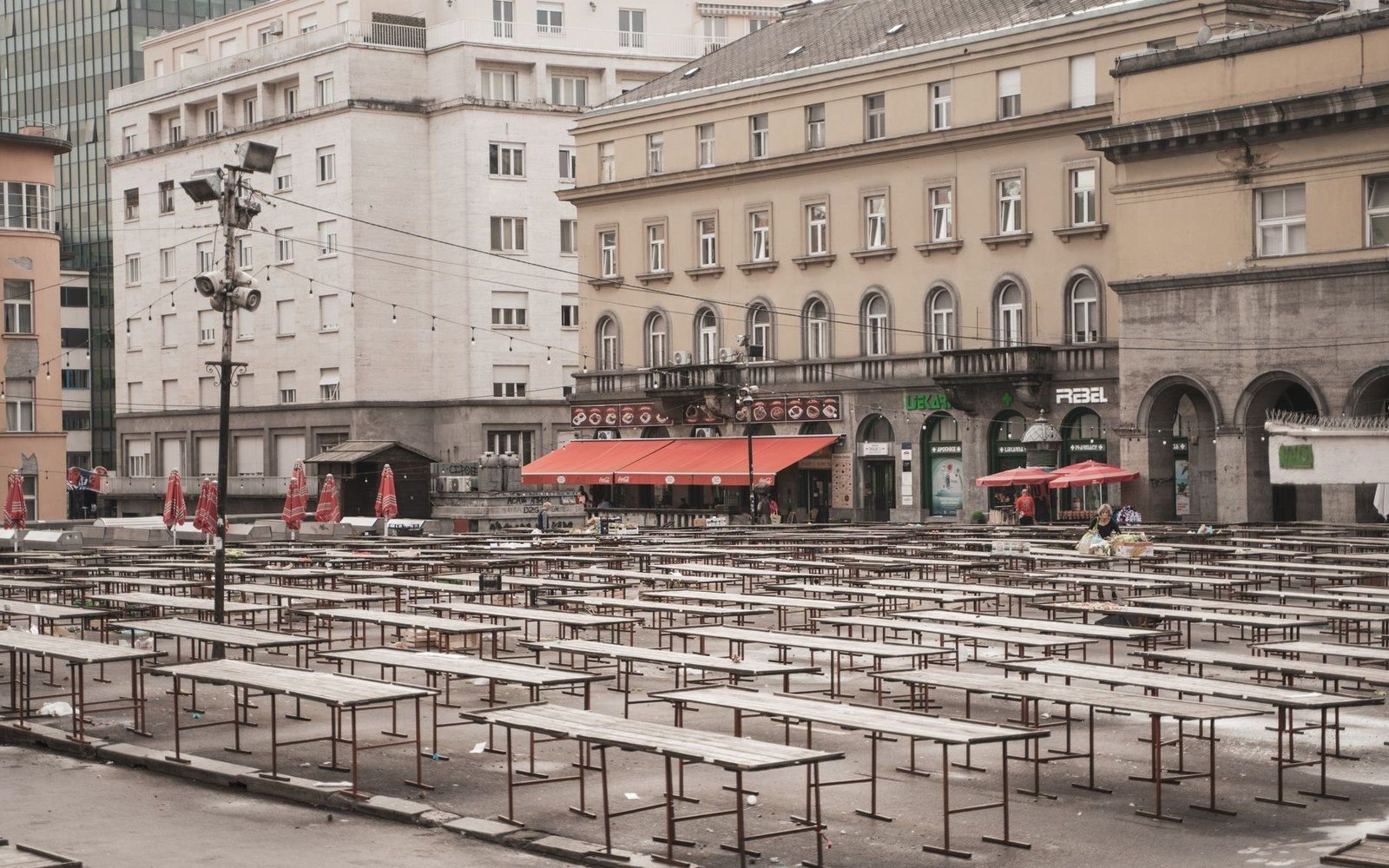
That portability was also the stands' vulnerability. There was no permanent infrastructure to defend, which made the Chili Queens easy to displace when city authorities decided, in the early twentieth century, that open-air food vending was a public health matter to be regulated out of existence.
 PL. 03