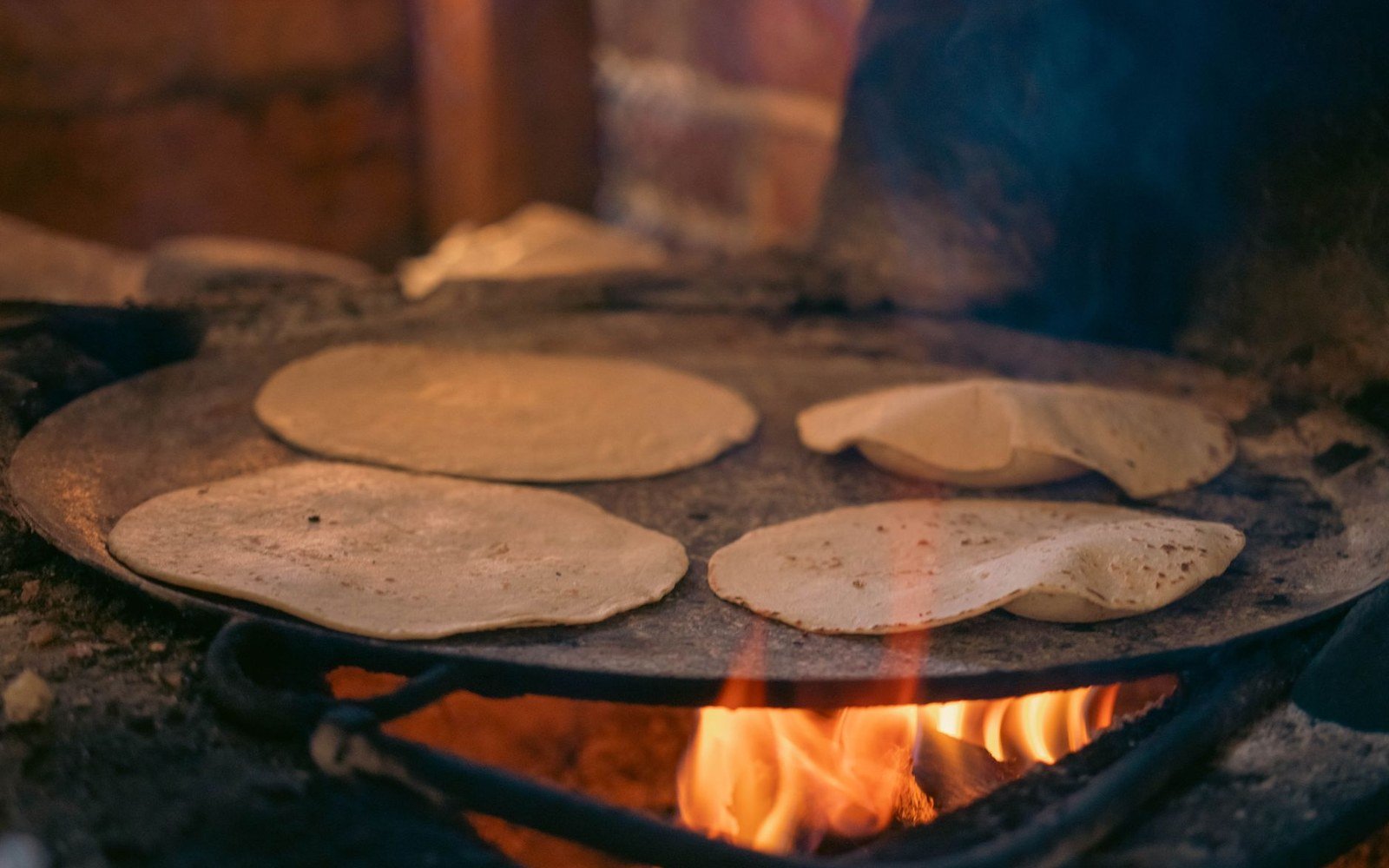
The blistering
Dry heat, steam trapped inside the dough, and the puff that tells you the griddle is at the right temperature.
What the comal is actually doing
A comal — the flat, unrimmed griddle central to Tejano cooking — works without oil, without water, without any medium between metal and dough. That directness is the whole point. When a raw tortilla hits a comal at the right temperature, something happens fast: the moisture locked inside the masa or dough converts to steam, and the tortilla puffs. Not the whole thing, usually — a single blister rises, tightens, then subsides as the steam escapes. That blister is not incidental. It is the clearest diagnostic a cook has that the griddle is doing its job.
The temperature window is narrow. Too cool, and the steam builds too slowly; the dough dries out before it lifts, and the tortilla turns leathery and pale. Too hot, and the surface scorches in seconds, locking the exterior before interior moisture can travel anywhere — the tortilla chars on the outside and stays raw in the middle. The blister appears only when surface heat is high enough to drive steam quickly but the dough still has the structural give to trap it. Experienced cooks read this not by thermometer but by timing and sound: the faint hiss as the tortilla hits the metal, the slight lift visible within the first thirty seconds.
Corn and flour behave differently
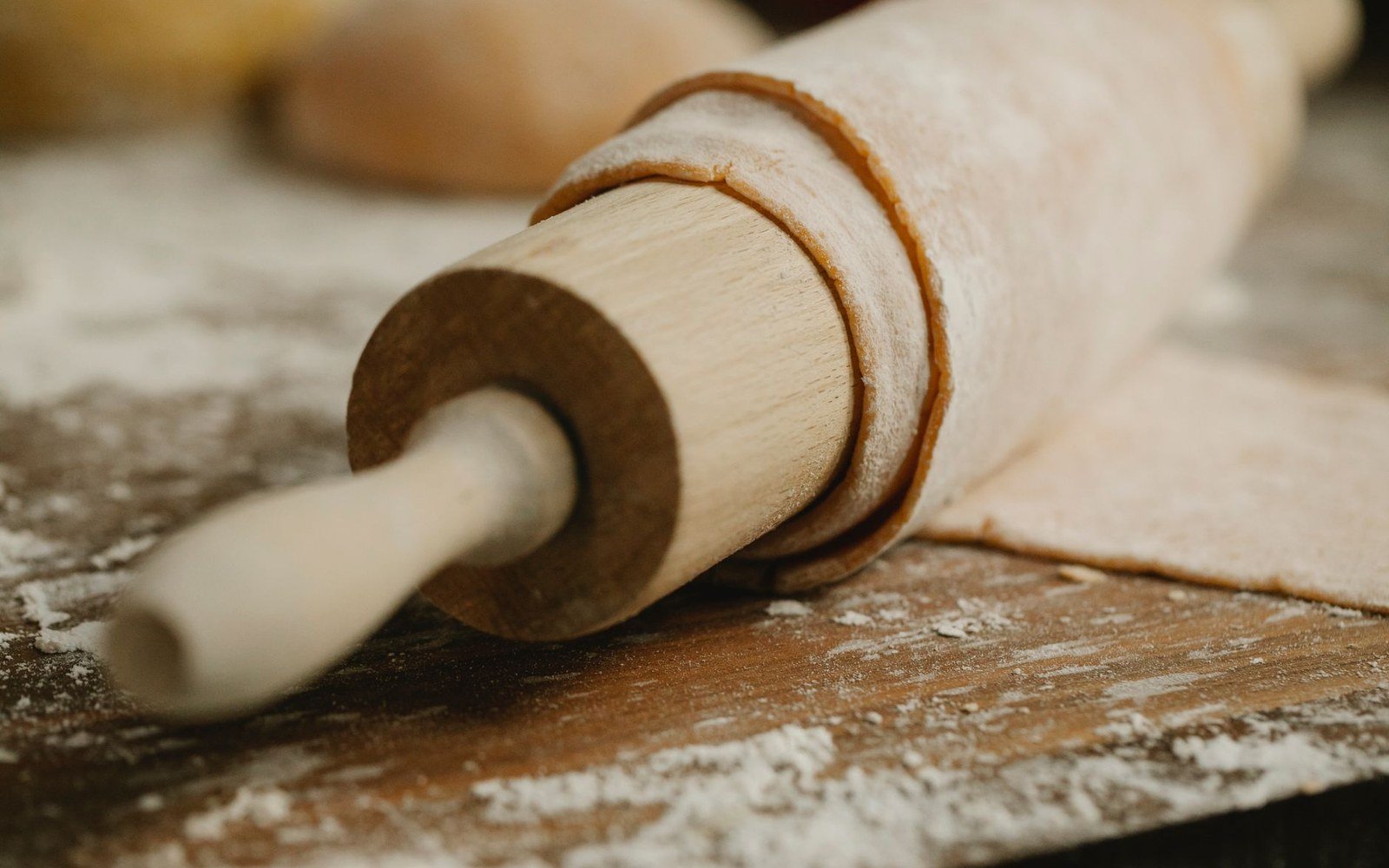
A nixtamalised corn tortilla and a wheat-flour tortilla blister by the same physics, but they feel different under the hand and they behave differently on the comal. Masa — ground nixtamal — has almost no gluten. It is held together by the gelatinised starch of the cooked corn and by fat, not by protein strands. When steam pushes against it, it lifts but the blister is often partial and brief; the masa does not stretch so much as separate in a thin shell. A flour tortilla, by contrast, has a developed gluten network from resting the dough. Gluten is elastic; it lets the blister inflate more dramatically before the steam escapes, which is why a well-made flour tortilla can dome almost completely — visibly ballooning — before it settles back flat.
 PL. 04
The puffy taco takes a different route entirely: raw masa dropped into hot fat rather than onto dry metal, where the same steam-and-lift principle produces a hollow shell the cook folds before it sets. The comal and the fryer are working the same dough physics in opposite directions.
What the blister tells a cook
The comal itself is seasoned over time — layers of carbonised starch from thousands of tortillas — and that surface stores and distributes heat more evenly than bare metal. A new comal blisters unevenly; an old one, properly cured, gives a consistent lift across the whole surface. Tejano kitchens have always treated the comal as equipment that improves with use, not equipment that needs scrubbing clean.
The flip is a separate judgment. Corn tortillas typically go through two flips on a comal — first side, second side, back to the first — with the blister occurring on the second contact. Flour tortillas may blister on the first flip or the second depending on thickness; a thicker, northern-style flour tortilla blistered properly on both sides arrives at the table with a charred spot here and there, slightly chewy at the centre and flaky at the edges. That textural contrast — the char, the chew, the soft interior — is not a flaw in the cooking. It is the direct result of the steam having been there and gone.
Cooks working large volumes — the kind of throughput the Chili Queens of San Antonio managed, or a busy household feeding a big family — learn to read the whole comal surface at once, running multiple tortillas at staggered intervals so that each is at a different stage. The blister on one tells you when to flip another. The comal becomes, in this way, its own timer: a surface that communicates through heat, lift and colour rather than a dial or a clock.
 PL. 03