Corn, lime, masa
Nixtamalisation: cooking corn in an alkaline solution changes its structure, its nutrition and whether it will hold together at all.
What the alkali does that cooking alone cannot
Dried corn is hard, sealed and nutritionally incomplete. Drop it in plain boiling water and it softens eventually, but it stays chemically what it was: a grain whose niacin is bound in a form the human body cannot absorb, and whose proteins will not bond into anything that holds a shape. For millennia, cooks in Mesoamerica knew the fix, even before anyone could explain the chemistry. They cooked the corn in an alkaline solution — typically water and cal, slaked lime made from calcium hydroxide — then steeped it overnight, rinsed it, and rubbed away the loosened hulls. The result was nixtamal: swollen, fragrant kernels that behave like a completely different ingredient. That process is nixtamalisation, and without it there is no masa, no tortilla, no tamale — none of the corn-based cooking that runs through every strand of Tex-Mex and Tejano food.
The chemistry is straightforward enough to summarise. The alkali breaks the bonds that lock niacin to the corn's cell walls, making it bioavailable. It also partially gelatinises the starches and loosens the pericarp — the outer skin — so it slips free during washing, which carries away the cooking liquid called nejayote. Most importantly for cooks, it causes the proteins glutelin and zein to cross-link differently, creating a dough that is plastic and cohesive. Untreated cornmeal will not hold together under pressure; nixtamalised corn ground wet becomes masa, a dough that can be patted, pressed, rolled thin or shaped around a filling and will keep its form through the heat of a comal or a pot of simmering water.
The nutritional consequences were not abstract. Populations that adopted corn as a staple without nixtamalising it developed pellagra — the niacin-deficiency disease that swept through parts of the American South and Europe after maize spread there without the alkaline preparation that accompanied it in Mexico. The technique crossed no ocean with the grain. In the communities of northern Mexico and south Texas where corn had always been processed this way, pellagra was not the crisis it became elsewhere.
 PL. 04
From kernel to comal
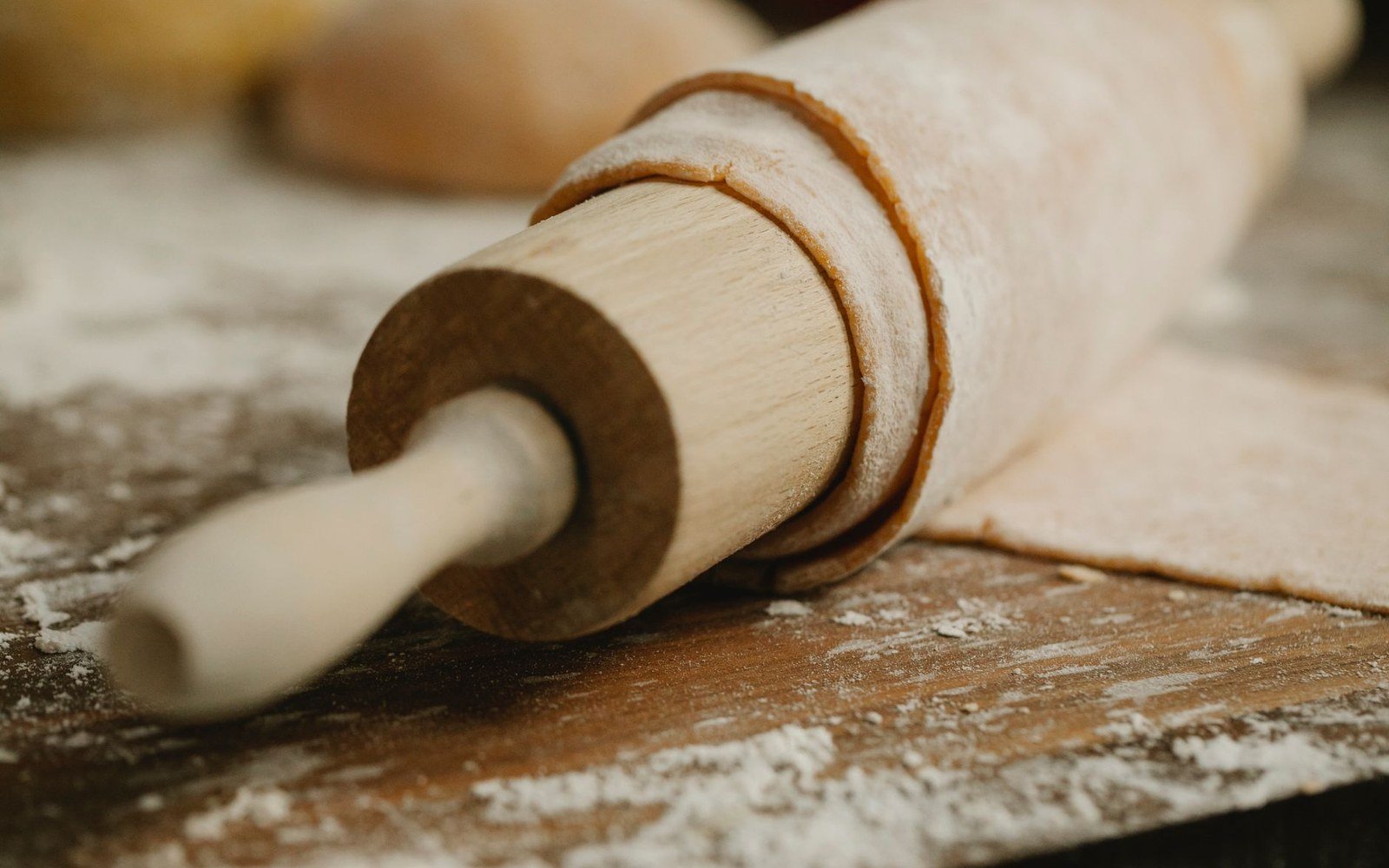
Fresh nixtamal is ground on a metate, a flat stone worked with a cylindrical mano, with water added gradually until the paste reaches the right consistency — smooth, slightly tacky, neither crumbly nor wet. In practice, home and community mills eventually took over much of the grinding. Masa harina, the dried and powdered form reconstituted with water, came later still, and it makes the difference between fresh masa and masa harina a meaningful one: the drying process damages the gelatinised starches, and the result, while workable, lacks the faint sourness and the close texture of masa ground fresh from nixtamal.
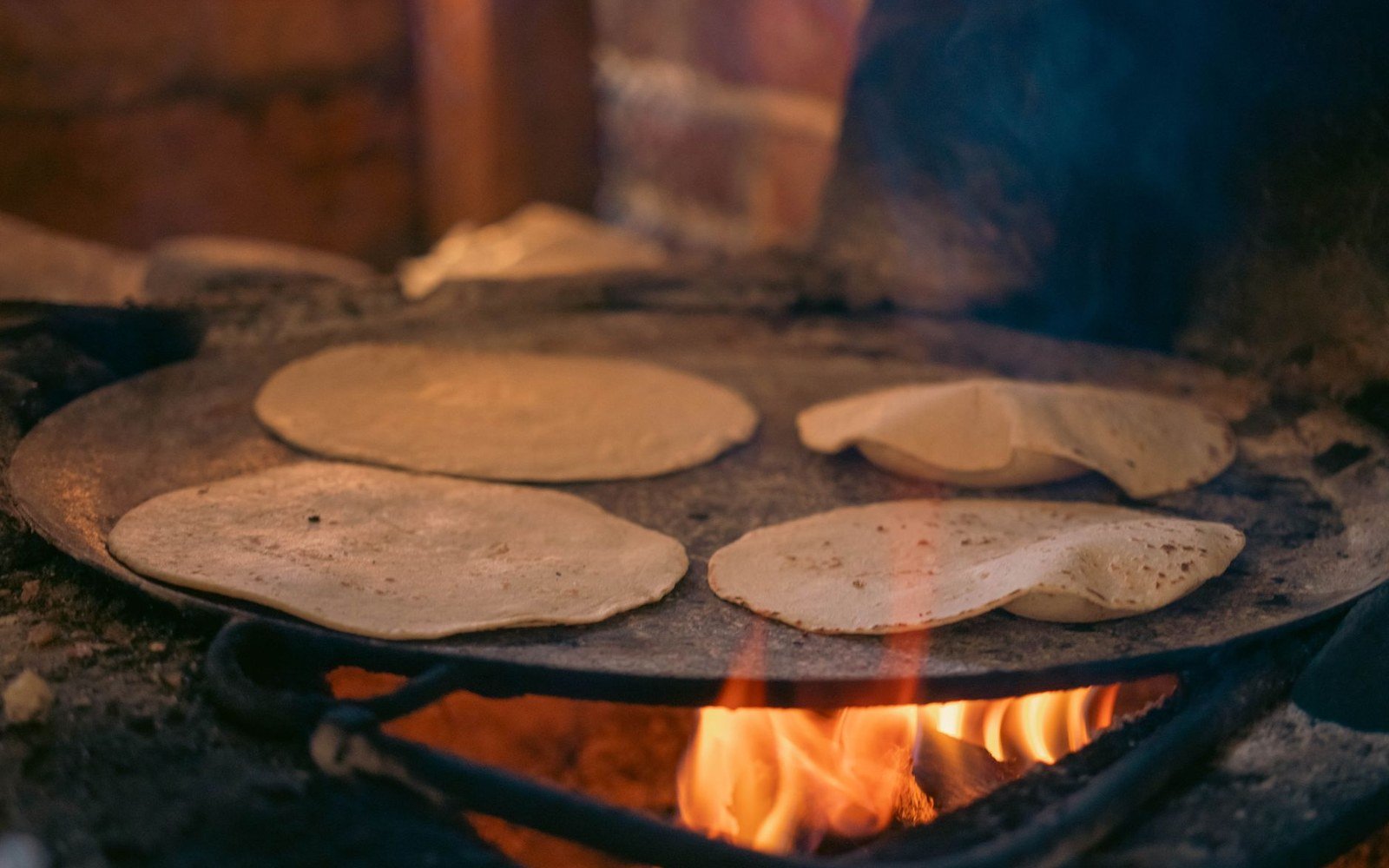
Once you have masa, the comal — a flat griddle of clay or, later, cast iron or steel — finishes the work. For a tortilla, a ball of masa is pressed flat and laid on a dry, hot surface. Moisture in the dough turns to steam; if the heat and thickness are right, the tortilla puffs briefly as the layers separate, which is one reliable sign that the dough was correctly made and the comal hot enough. The same masa, dropped into hot fat rather than laid on a griddle, produces the puffy taco — a later San Antonio elaboration that depends on exactly the same chemistry, just a different cooking medium.
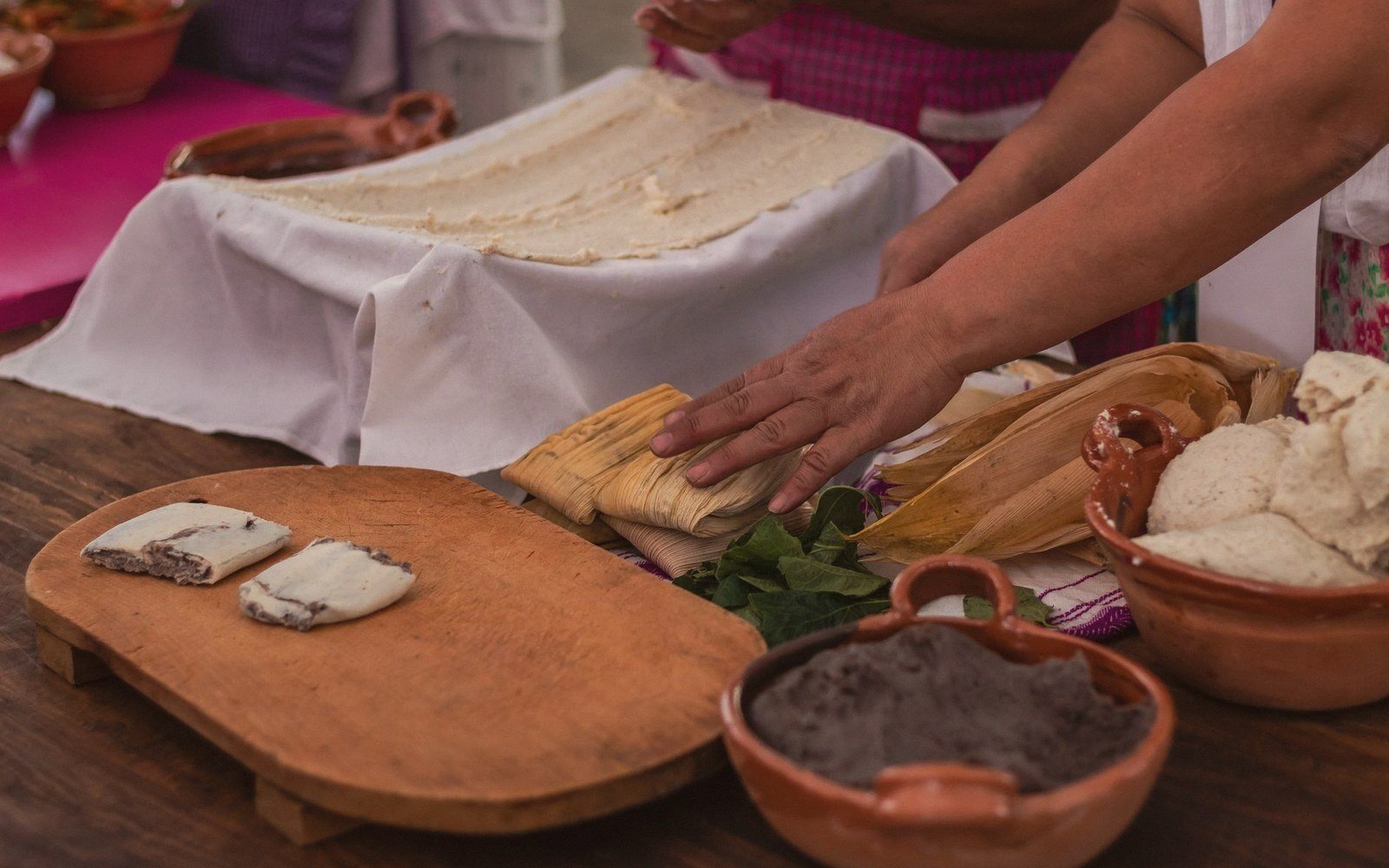
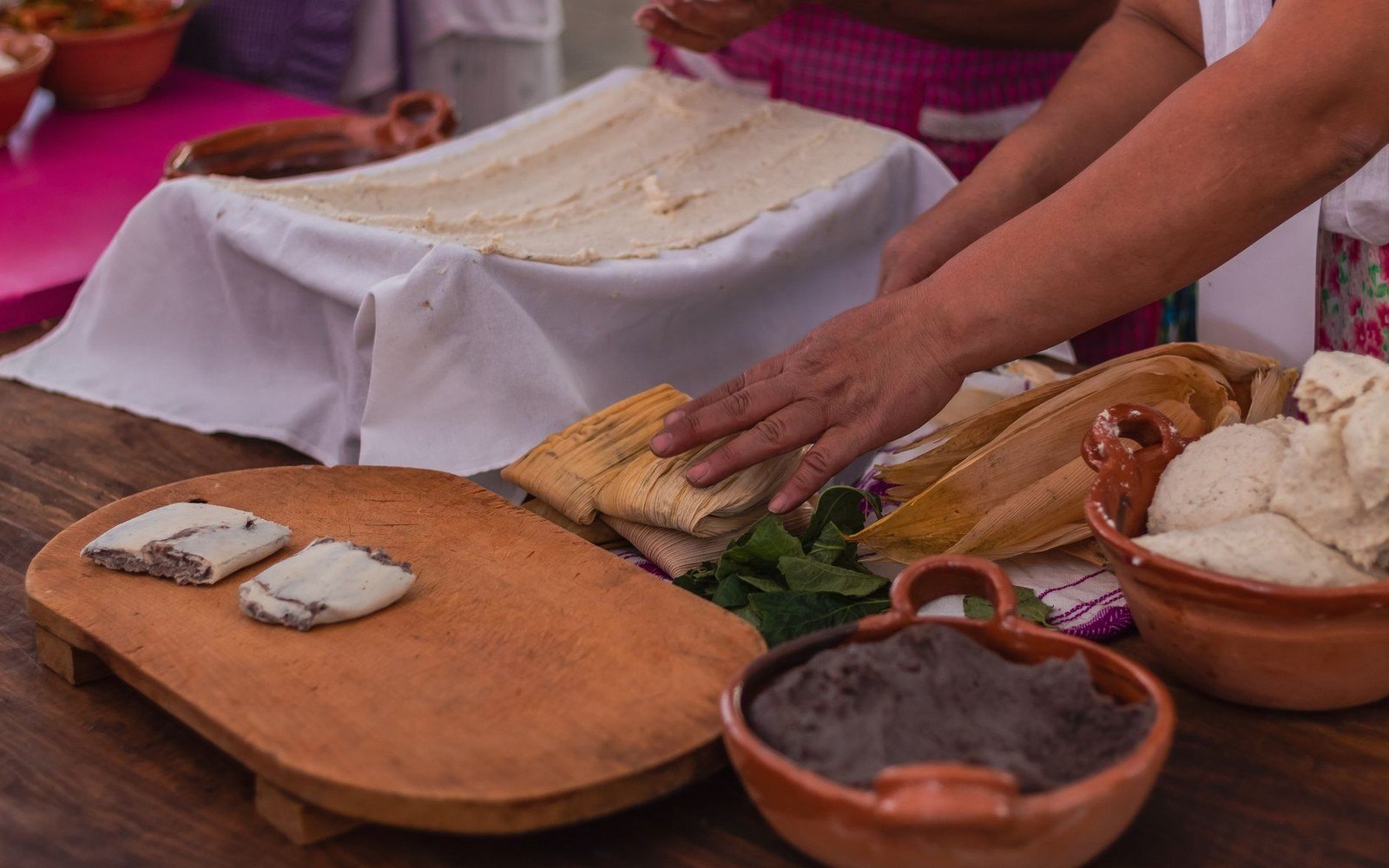
For tamales, masa is worked with lard or another fat until it is light enough to float a small piece in water — the traditional test — then spread on a soaked corn husk, filled, folded and steamed. The fat changes the texture; the nixtamalisation is what makes any of it possible.
The technique is old, but in Tejano kitchens it was not archaic. Families in San Antonio and along the border were nixtamalising corn at home and at community mills well into the twentieth century, and the practice shapes the flavour of the food in ways that masa harina approximates but does not fully reproduce. The slight mineral edge, the particular way the dough grips a filling or releases from a griddle — those qualities come from the lime, the steep, the rinse, and the stone. Everything else follows from that.
 PL. 03