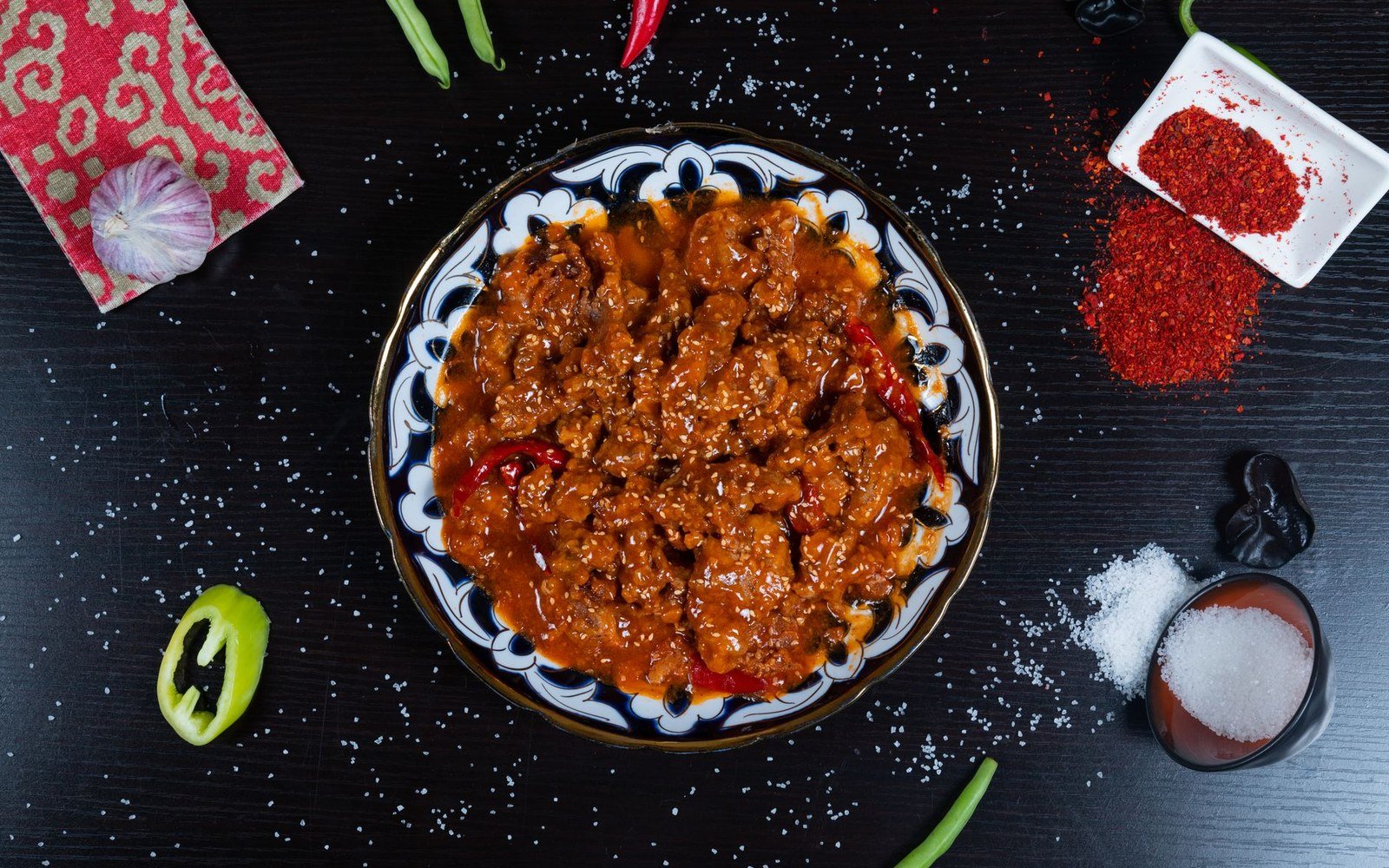
Chili con carne
Meat and chile with no beans in the original, thickened by the chile itself, and how the bowl travelled out of Texas.
Red, no beans, and a long argument
The dish is simple in statement and contested in almost every other respect: dried red chiles, meat, and time. No beans in the original — that addition came later and elsewhere, and Texans have not forgiven it.
The earliest documented versions of chili con carne come from San Antonio in the nineteenth century, and the women who made it most visibly were the Chili Queens, who sold it from open-air stands in Military Plaza and, later, Haymarket Plaza. Their chili was built on dried chiles — ancho and guajillo, sometimes pasilla — toasted, soaked, and worked into the meat rather than spooned over it. The chile was not a garnish; it was the structure of the dish. No tomato, no filler, and no beans. Thickening came from the dissolved solids of the rehydrated chiles themselves and from the collagen that long cooking drew out of tougher cuts.
Cumin arrived early and stayed. Canary Islander settlers brought comino to San Antonio's kitchens in the eighteenth century, and it became so characteristic of the regional pot that chili without it simply did not taste right. Oregano appeared too, usually the Mexican variety, which is drier and more resinous than its Mediterranean cousin. Beyond those constants, cooks disagreed — on chile ratio, on whether to brown the meat first, on whether garlic belonged.
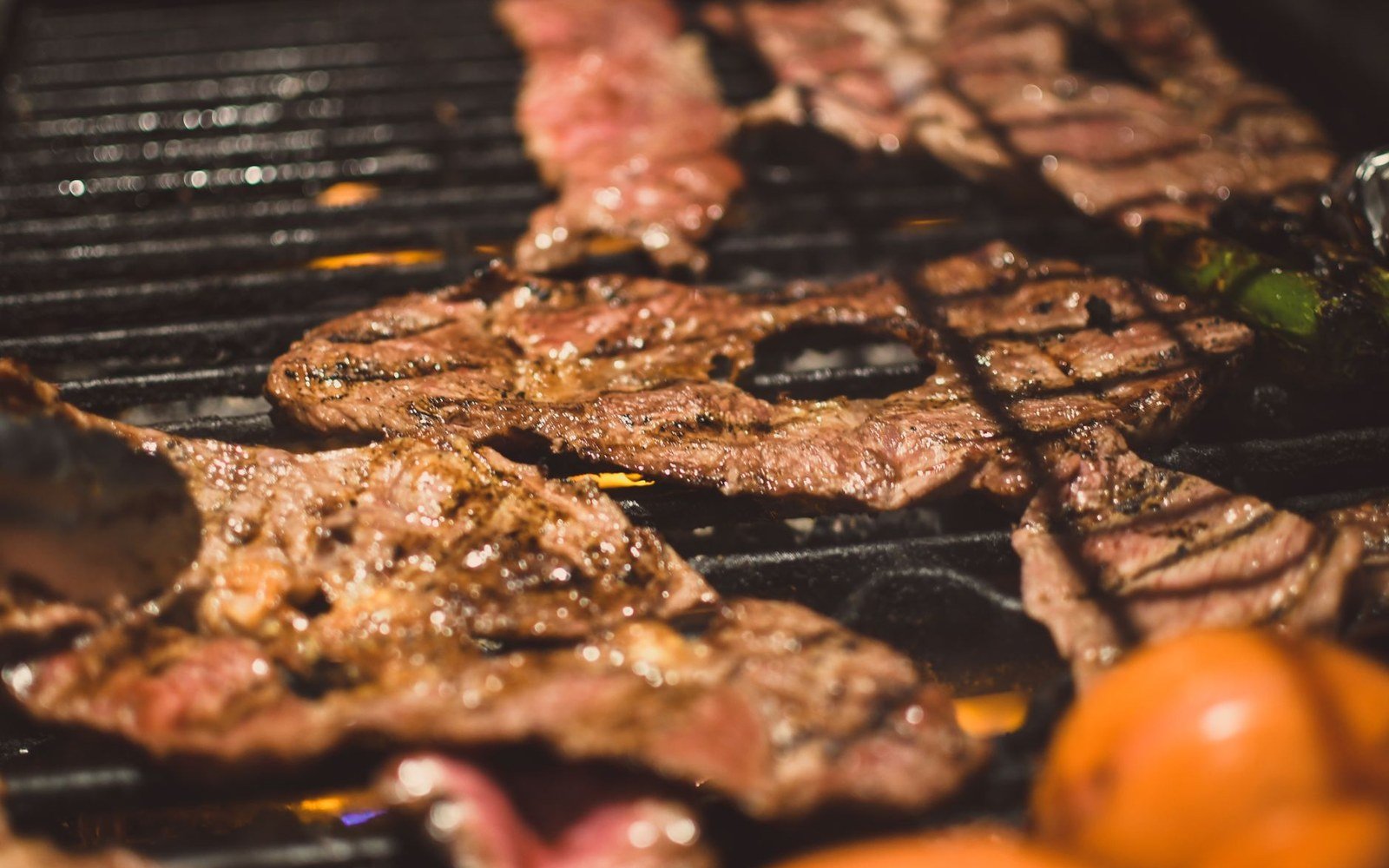
The meat was almost always beef. The cut mattered: the Chili Queens and the cooks who learned from them preferred something with enough connective tissue to break down over a long braise, because a lean cut would turn fibrous and dry before the chiles had fully melted into the liquid. Chuck was common. So was the cheaper, tougher shoulder meat that a poor household or a street vendor would have been able to afford. The point was long, slow heat — not a quick sear.
 PL. 04
How the bowl travelled
San Antonio's version crossed the country faster than expected, partly because the U.S. Army carried it westward, partly because the dish appeared at the 1893 World's Columbian Exposition in Chicago, where a Texas chili stand introduced it to a national audience. From there, regional adaptations multiplied. Cincinnati developed its own version — thin, sweet, spiced with cinnamon and allspice, served over spaghetti — which is genuinely its own tradition and bears no resemblance to the San Antonio original. The canned product that appeared in the early twentieth century added beans and thickeners and distributed something called chili across every state in the union.
Texas held the line. In 1977, the state legislature named chili con carne the official state dish, specifying, implicitly if not explicitly, the beanless version. The International Chili Society and the Terlingua cookoffs that began in 1967 made the argument public and competitive: sanctioned chili, in those original contests, was meat, chiles, and seasoning. Beans were a disqualifying addition.
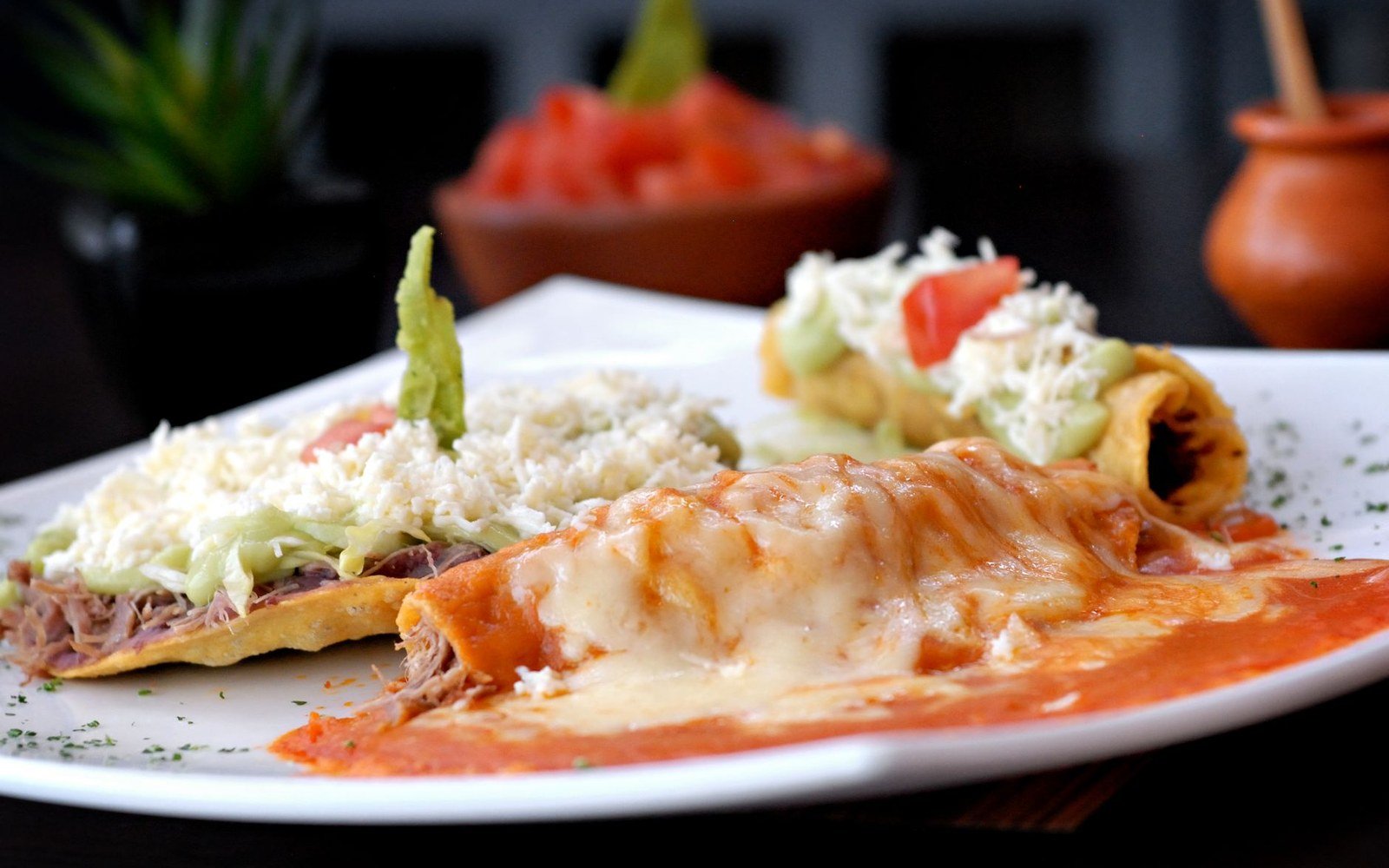
What the purists were defending was not just a recipe but a method. The chili gravy that became standard on the Tex-Mex plate — roux-thickened, cumin-forward, poured over enchiladas — is a cousin of that same tradition, flour and fat standing in for the slow reduction that a long-cooked bowl of chili produced naturally. Both are products of the same border kitchen logic: dried chiles as flavour base, cumin as the regional signature, beef as the protein of the south Texas ranching economy.
The dish that left San Antonio was already a simplification of something older. The Chili Queens were not working from a written recipe; they were cooking from accumulated practice, adjusting for the volume of a street trade, the price of meat that week, the chiles available. What they produced was not static, and the argument about what chili con carne really is has never fully resolved — which is probably how a dish that began in the open air of a working plaza should end up.
 PL. 03